
10 June 2026
Acrylic, blend, or pure wool
Three fibres, three quite different customers. What each one does on the shelf, in the wash, and at the price your buyer expects.
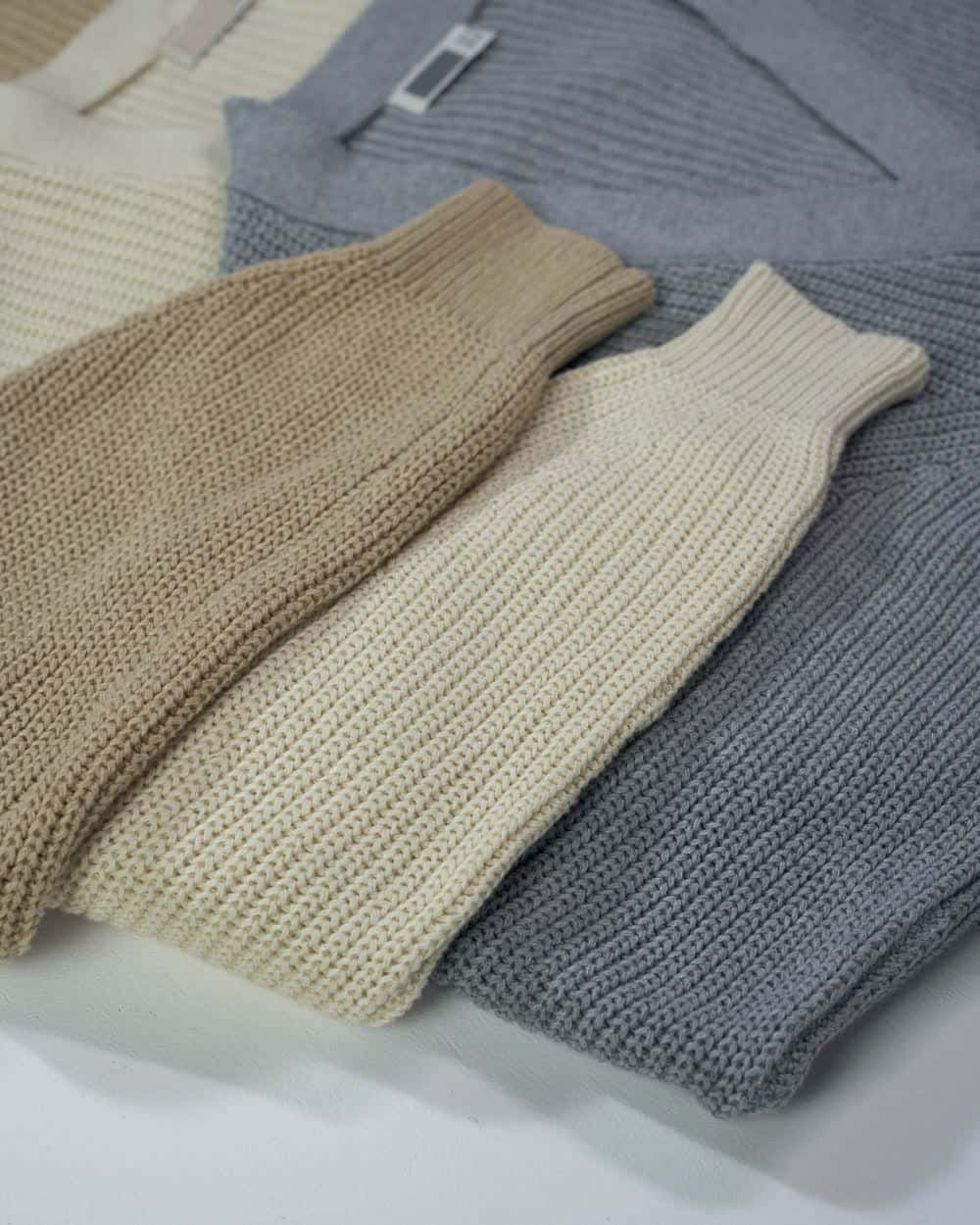
Most winter categories come in three broad constructions, and the difference between them is not quality in a simple sense. It is fitness for a particular customer.
Acrylic is the volume fibre and there is no shame in it. It takes bright colour better than wool does, it holds shape through repeated washing, it does not shrink when somebody puts it in a machine that was never meant for it, and it sits at a price a family buying four sweaters can actually pay. What it does not do is breathe. Worn indoors for a long day it feels warmer and heavier than its weight suggests.
Wool blends are the middle of the market and, for most shops in this part of the country, the largest part of it. A blend keeps enough wool for the handle and the breathability, and enough synthetic for the shape retention and the price. If a customer asks for something that feels better than acrylic without a step up in price, they are describing a blend.
Pure wool is a smaller, more particular sale. It is warmer for its weight than either of the others, it is the only one of the three that genuinely improves with a good airing rather than a wash, and it carries requirements: gentler washing, careful drying, a customer who will do both. Sold to the right person it is the item they come back for. Sold to the wrong one it comes back for a different reason.
The mistake worth avoiding is stocking only one of the three. A shelf of nothing but acrylic has no answer for the customer who wants better. A shelf of nothing but pure wool has no answer for the one who wants four.
Ask to feel all three side by side before you decide the mix. Fibre is one of the very few things in this trade that a photograph genuinely cannot tell you.